
 Image 1 of 4
 Image 2 of 4
 Image 3 of 4
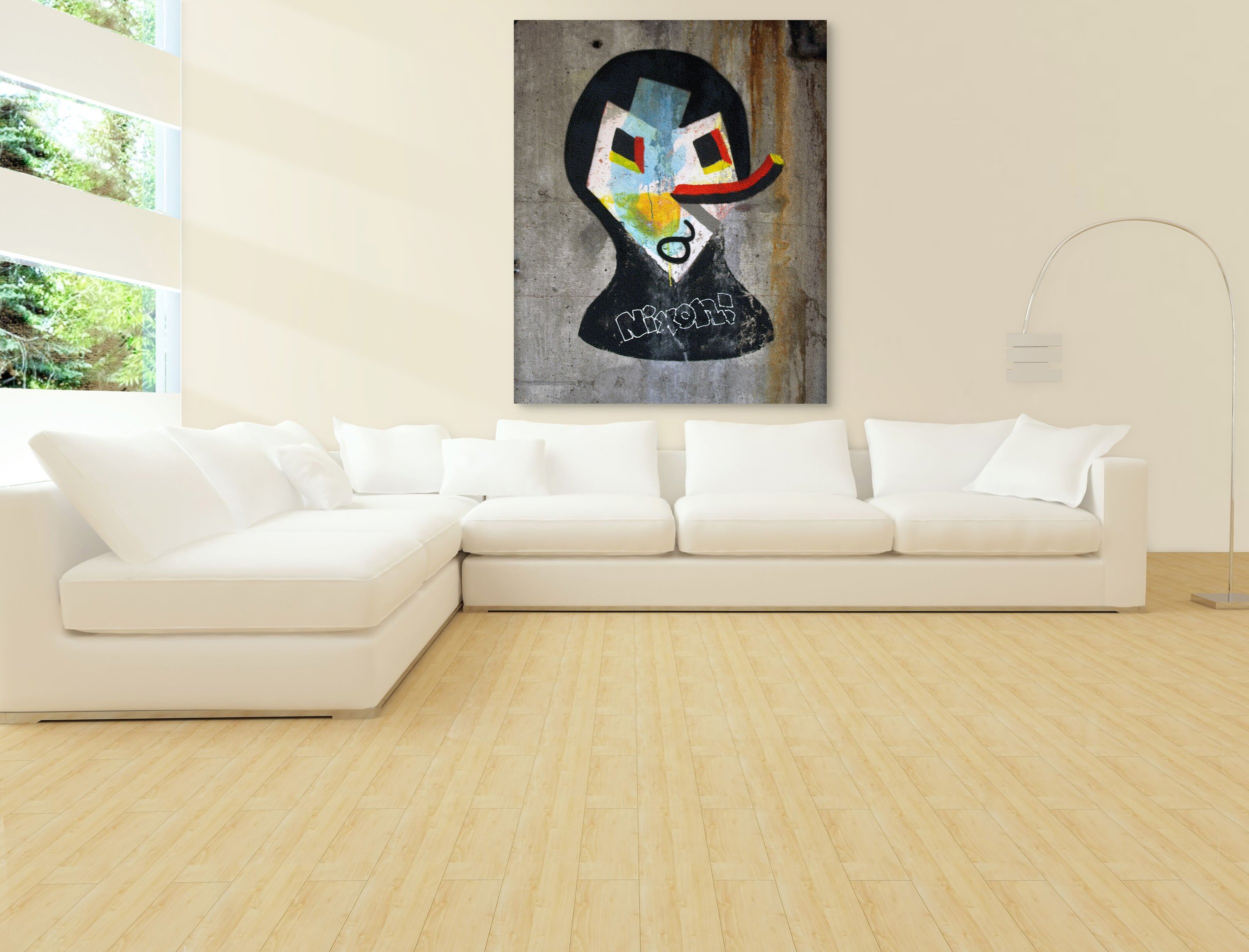 Image 4 of 4
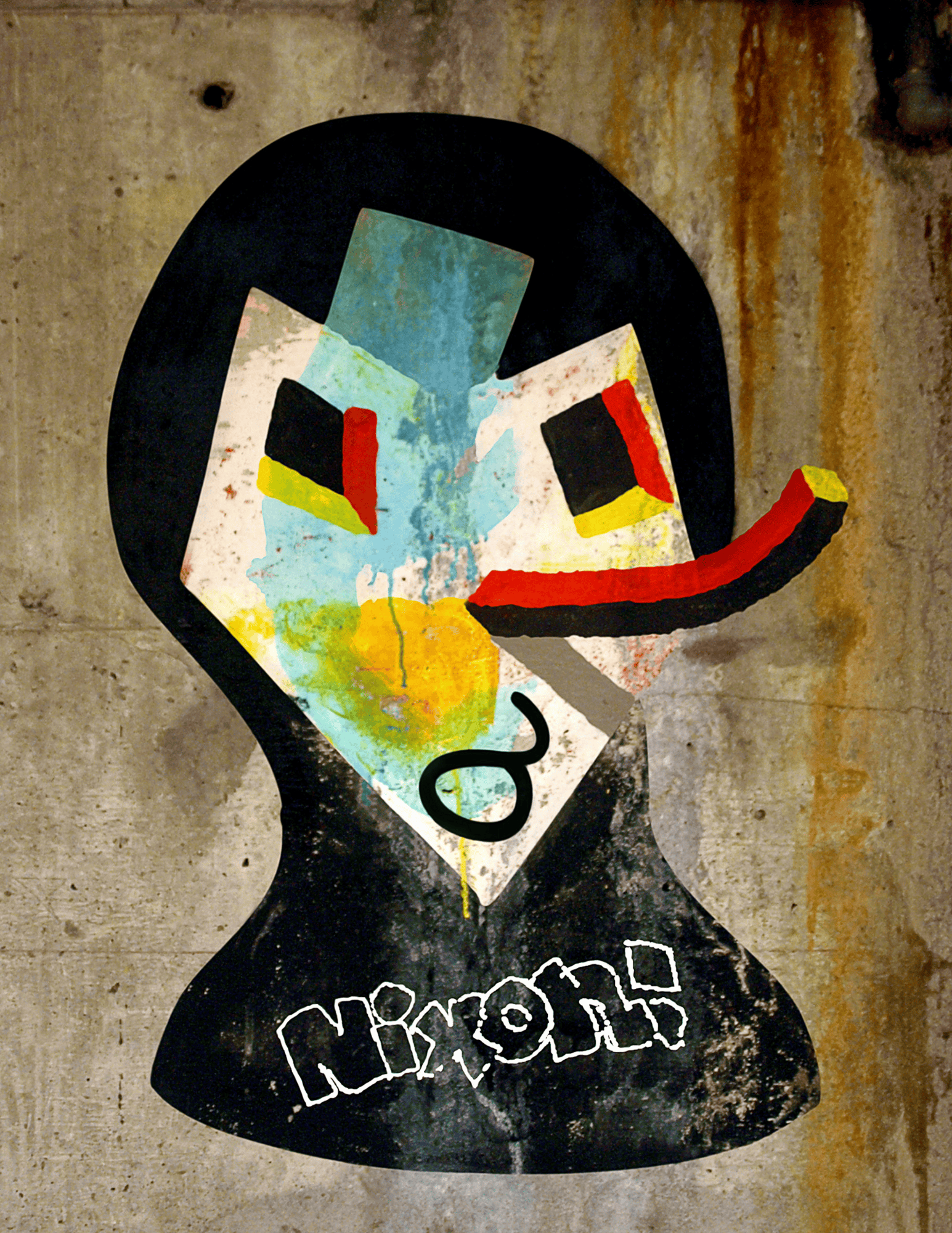
Nixon (c. 2014–2015) is a defining work by 500M, executed using his signature Incrustations Urbaines approach, in which the existing surface is treated as an active collaborator rather than a neutral backdrop.
A stark black silhouette anchors the composition, enclosing a fragmented interior of geometric forms rendered in primary tones of blue, yellow, red, and black. These elements suggest a face through proportion and placement rather than literal depiction, drawing from traditions of Cubism, Russian Constructivism, and modern abstraction while remaining firmly grounded in the language of the street.
Rather than masking the wall’s decay, Connery incorporates its stains, erosion, and imperfections into the work itself. This sensitivity to surface reinforces a central theme of his practice: the inseparability of image, environment, and context. The result is a portrait that feels simultaneously constructed and eroded, symbolic and unstable.
The hand-rendered NIXON inscription situates the piece within political and historical discourse, yet the work resists direct narrative. Power, identity, and authority are implied rather than illustrated, allowing the viewer to project meaning into the fractured geometry and negative space.
Produced here as an archival print, Nixon represents an important example of 500M’s ability to merge formal abstraction with socio-political tension, transforming public architecture into a site of critical reflection.
Nixon (c. 2014–2015) is a defining work by 500M, executed using his signature Incrustations Urbaines approach, in which the existing surface is treated as an active collaborator rather than a neutral backdrop.
A stark black silhouette anchors the composition, enclosing a fragmented interior of geometric forms rendered in primary tones of blue, yellow, red, and black. These elements suggest a face through proportion and placement rather than literal depiction, drawing from traditions of Cubism, Russian Constructivism, and modern abstraction while remaining firmly grounded in the language of the street.
Rather than masking the wall’s decay, Connery incorporates its stains, erosion, and imperfections into the work itself. This sensitivity to surface reinforces a central theme of his practice: the inseparability of image, environment, and context. The result is a portrait that feels simultaneously constructed and eroded, symbolic and unstable.
The hand-rendered NIXON inscription situates the piece within political and historical discourse, yet the work resists direct narrative. Power, identity, and authority are implied rather than illustrated, allowing the viewer to project meaning into the fractured geometry and negative space.
Produced here as an archival print, Nixon represents an important example of 500M’s ability to merge formal abstraction with socio-political tension, transforming public architecture into a site of critical reflection.